



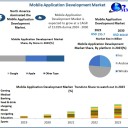
Mobile Application Development Market size was valued at USD 195.7 Billion in 2023 and the total Mobile Application Development Market revenue is expected to grow at a CAGR of 13.01% from 2023 to 2030, reaching nearly USD 460.69 Billion in 2030.
Global Mobile Application Development Market OutlookThe Global Mobile Application Development Market was valued at USD 195.7 billion in 2023 and is projected to grow at a robust CAGR of 13.01% between 2024 and 2030, reaching nearly USD 460.69 billion by 2030. Rapid smartphone adoption, widespread internet connectivity, and continuous innovation in digital technologies are driving the market’s expansion worldwide.
Mobile Application Development Market Overview
Mobile application development refers to the design, creation, and deployment of software applications for mobile devices such as smartphones, tablets, and digital assistants. These applications can be accessed through native app stores like Google Play and Apple App Store or via mobile web browsers.
The market has witnessed remarkable growth due to the increasing reliance on mobile devices for daily activities including shopping, digital payments, banking, healthcare, education, entertainment, and social networking. Businesses across industries are increasingly investing in mobile applications to strengthen customer engagement, enhance brand presence, and deliver seamless digital experiences.
Advancements in cloud computing, low-code and no-code platforms, artificial intelligence (AI), augmented reality (AR), and virtual reality (VR) are further simplifying app development while enabling immersive and personalized user experiences.
To know the most attractive segments, click here for a free sample of the report: https://www.maximizemarketresearch.com/request-sample/59015/" target="_blank"> https://www.maximizemarketresearch.com/request-sample/59015/
Key Market Drivers
Rising Smartphone Penetration and Internet Usage
The surge in global smartphone users remains the most influential driver of the mobile application development market. As of 2023, over 5.3 billion people were connected to the internet, representing nearly two-thirds of the global population, with more than 92% of internet usage occurring via mobile devices. Affordable smartphones and expanding mobile networks have accelerated app adoption across both developed and emerging economies.
Growth of Digital Services and Mobile Commerce
Mobile applications have transformed how consumers interact with services. The rapid expansion of e-commerce, digital banking, telemedicine, online education, and mobile entertainment has created a strong demand for feature-rich, secure, and user-friendly mobile applications. Companies are leveraging mobile apps to offer personalized experiences, loyalty programs, and real-time services, strengthening customer retention.
Technological Innovation in App Development
The integration of AI, AR, and VR is redefining mobile app functionality. These technologies enable advanced features such as intelligent chatbots, predictive analytics, immersive gaming, virtual shopping, and interactive learning. Additionally, cloud-based development tools and cross-platform frameworks are reducing development time and costs, making app creation more accessible to businesses of all sizes.
Market Restraints
High Development and Maintenance Costs
Despite strong growth prospects, the mobile application development market faces challenges related to high development costs, particularly for apps designed to function across multiple platforms such as iOS and Android. Each platform has unique development requirements, tools, and compliance standards, increasing complexity and expenses.
Market Saturation and Regulatory Challenges
With millions of applications available on major app stores, gaining visibility has become increasingly difficult for new entrants. Developers must focus on innovation, superior user experience, and effective marketing strategies to stand out. Additionally, stricter data privacy regulations and evolving security requirements have increased compliance costs, while frequent operating system updates necessitate continuous app maintenance.
Mobile Application Development Market Segmentation Analysis
By Application
The gaming segment dominated the market in 2023, accounting for approximately 39.23% of total revenue. High-performance smartphones, advanced graphics, and engaging gameplay models—such as freemium and in-app purchases—have significantly boosted mobile gaming adoption. From casual games to competitive esports and immersive role-playing games, the segment continues to attract a diverse user base.
The music and entertainment segment is expected to witness strong growth during the forecast period, driven by increasing consumption of streaming services. Popular platforms such as Netflix, YouTube, Spotify, and Hulu continue to invest in enhanced user interfaces, 3D visuals, and personalized content delivery.
By Store Type
The Google Play Store held the largest market share in 2023 and is expected to maintain its leadership through 2030. The widespread adoption of Android devices, particularly in emerging markets, and the availability of a vast range of free and paid applications contribute to its dominance. The entry of new smartphone manufacturers has further expanded the Android ecosystem.
To know the most attractive segments, click here for a free sample of the report: https://www.maximizemarketresearch.com/request-sample/59015/" target="_blank"> https://www.maximizemarketresearch.com/request-sample/59015/
Regional Insights
North America
North America led the global mobile application development market with a 46.03% share in 2023. The region benefits from high smartphone penetration, strong consumer spending on premium apps, and the presence of major technology companies such as Apple, Google, Microsoft, Netflix, and IBM. Advanced infrastructure and early adoption of emerging technologies continue to support market growth.
Europe
Europe accounted for 31.6% of the market share and is experiencing steady growth driven by digital transformation initiatives, innovation-friendly ecosystems, and increasing mobile adoption across industries. Countries such as Germany, the UK, and Ireland host leading app development firms and digital agencies that serve a wide range of global clients.
Asia-Pacific
Asia-Pacific is the fastest-growing region and is expected to maintain strong momentum through 2030. Rapid urbanization, large populations in China and India, and the growing use of smartphones for digital payments, e-commerce, and social media are driving demand. The region benefits from a mix of developed and emerging markets, offering vast growth opportunities.
Competitive Landscape
The Mobile Application Development Market is highly competitive and dynamic, characterized by continuous innovation and strategic collaborations. Leading companies focus on research and development, partnerships, mergers and acquisitions, and integration of advanced technologies to strengthen their market presence.
Key players are prioritizing user-centric design, scalability, security, and performance optimization to cater to diverse industry needs such as healthcare, finance, retail, entertainment, and education.
Recent developments highlight the industry’s momentum, including the launch of advanced gaming applications, government-backed digital platforms, and strategic acquisitions aimed at enhancing enterprise mobile application capabilities.
Mobile Application Development Market Scope
Base Year: 2023
Forecast Period: 2024–2030
Market Size (2023): USD 195.7 Billion
Market Size (2030): USD 460.69 Billion
CAGR: 13.01%
Segments Covered:
Platform: iOS, Android, Windows
Store Type: Google Play Store, Apple App Store, Others
Application: Gaming, Banking, Music & Entertainment, Social Media, Retail & E-commerce, Health & Fitness, Travel & Hospitality, Learning & Education
Conclusion
The global mobile application development market is set for sustained expansion, driven by rising smartphone usage, rapid digitalization, and continuous technological advancements. While challenges such as high development costs and market saturation persist, innovation in AI-driven applications, immersive user experiences, and cross-platform development tools will continue to unlock new growth opportunities. As businesses increasingly rely on mobile platforms to engage customers, the market is poised to remain a cornerstone of the global digital economy through 2030.
Neuste Artikel
- LiDAR Sensing Technology Powering Autonomous Intelligence (
 dbmrsuresh)
 - Personalized 3D Printed Implants Transforming Orthopedic Care ( dbmrsuresh)
- Carotenoids Enhancing Nutrition Color and Functional Health ( dbmrsuresh)
- Iodine Supply Supporting Nutrition and Industrial Applications ( dbmrsuresh)
- Tiny Home Living Redefining Affordable Housing Solutions ( dbmrsuresh)
- Marketing Technology Platforms Powering Data Driven Growth ( dbmrsuresh)
Die neuesten Forenbeiträge
- rrg ( alicecgibson)
- Did you need to equip the assembly halls with audio-visual equipment? ( ravindrankhx)
- A Guide to the Addictive World of Slope ( GeorgeGarrett)
- IMCWire Press Release Services Enhance Reach to Target Audiences (
 erinepitts052)
 - IMCWire Press Release Services Promote News Across Major Platforms ( SelahFrederick)
- sasas ( alicecgibson)
Werbung