



 supriyamaximize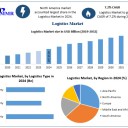
The Logistics Market size was valued at USD 297.05 Billion in 2024 and the total Logistics revenue is expected to grow at a CAGR of 7.2% from 2025 to 2032, reaching nearly USD 518.08 Billion.
Global Logistics Market OverviewThe Global Logistics Market was valued at USD 297.05 billion in 2024 and is projected to reach USD 518.08 billion by 2032, growing at a CAGR of 7.2% from 2025 to 2032. The logistics sector plays a pivotal role in connecting suppliers, manufacturers, and end-users, ensuring the efficient movement of goods and related information across global supply chains.
Logistics encompasses transportation, warehousing, inventory management, and information flow, all aimed at meeting customer demand while optimizing cost efficiency. The industry is increasingly driven by globalization, technological innovation, e-commerce expansion, and sustainability initiatives.
To know the most attractive segments, click here for a free sample of the report: https://www.maximizemarketresearch.com/request-sample/94795/" target="_blank"> https://www.maximizemarketresearch.com/request-sample/94795/
Market Dynamics
Growth Drivers
Globalization and Trade Liberalization
The liberalization of global trade has boosted cross-border commerce, increasing the demand for logistics services worldwide. Free trade agreements and integrated supply chain networks have made it easier for businesses to reach international markets efficiently.
E-commerce Expansion
The rapid rise of online shopping is a major driver of logistics growth. The surge in e-commerce has amplified the need for timely deliveries, inventory management, and reverse logistics solutions. This trend is particularly pronounced in regions like North America, Europe, and Asia Pacific, where online retail penetration is significant.
Technology Adoption
The integration of Internet of Things (IoT), AI-powered route optimization, warehouse automation, and digital logistics platforms (such as Project44, FourKites, and FreightVerify) is enhancing operational efficiency, reducing costs, and improving real-time visibility across supply chains. Countries like China and Germany are leading the way in technology-driven logistics transformation.
Economic Growth and Employment Opportunities
Logistics is a critical driver of economic activity, offering job creation and supporting trade infrastructure. Emerging markets such as India are witnessing a boom in logistics-related employment as demand for online delivery and manufacturing logistics continues to rise.
Market Restraints
Logistical Inefficiencies
Inefficient transportation networks, fragmented supply chains, and inadequate infrastructure can impede growth, particularly in rural and emerging regions.
Environmental Concerns
The logistics industry’s reliance on transportation contributes to greenhouse gas emissions. Companies are increasingly pressured to adopt eco-friendly and sustainable logistics solutions to comply with global environmental standards.
Geopolitical and Regulatory Challenges
Trade tensions, regulatory hurdles, and political instability can affect logistics operations, requiring firms to navigate complex international regulations and risk management strategies.
Market Segmentation
By Transportation Mode
Roadways – Largest segment at 33.19% in 2024, valued for cost-effectiveness and widespread accessibility, particularly in e-commerce fulfillment.
Airways – Rapid growth anticipated, critical for high-value and time-sensitive shipments.
Railways – Efficient for bulk cargo, key in regions with extensive rail networks.
Waterways – Essential for global trade, particularly for heavy and international freight.
By Logistics Type
First-Party Logistics (1PL) – Companies manage their own transportation and warehousing.
Second-Party Logistics (2PL) – Focus on contracted transportation and freight movement.
Third-Party Logistics (3PL) – Dominant segment at 39.24%, offering comprehensive outsourced logistics services including warehousing, transportation, and supply chain management, enabling firms to focus on core operations.
By End-Use Sector
Manufacturing – Leading sector at 29.81% in 2024, due to reliance on timely supply chain and production logistics.
Healthcare – Growing rapidly with a projected CAGR of 5.8%, critical for distribution of pharmaceuticals and medical equipment.
Aerospace, Technology, Retail, Telecommunication, Banking & Financial Services, Media & Entertainment, Government & Public Utilities, Trade & Transportation, Others – Each sector relies on specialized logistics solutions to ensure operational efficiency.
To know the most attractive segments, click here for a free sample of the report: https://www.maximizemarketresearch.com/request-sample/94795/" target="_blank"> https://www.maximizemarketresearch.com/request-sample/94795/
Regional Insights
North America
Mature and technologically advanced, with efficient road, rail, and air networks. Dominated by major players such as FedEx, UPS, and XPO Logistics, the region benefits from high e-commerce penetration and demand for fast delivery.
Europe
A well-established market emphasizing sustainability and green logistics. Companies like DHL, DB Schenker, and CMA CGM lead in efficiency and innovation, addressing cross-border challenges while reducing environmental impact.
Asia Pacific
The fastest-growing region, driven by e-commerce expansion and rising middle-class populations. Key players like Alibaba’s Cainiao and JD Logistics are investing in technology-driven logistics solutions. China and India remain central hubs for regional and global logistics operations.
Middle East & Africa
Significant growth driven by infrastructure development, urbanization, and strategic hubs such as Dubai, linking Europe, Asia, and Africa.
Latin America
Emerging opportunities amid challenges like regulatory complexity and infrastructure gaps. Growth is propelled by e-commerce and investment in efficient logistics networks.
Competitive Landscape
The logistics market is highly competitive, with multinational players, regional operators, and technology-driven startups. Strategic partnerships, technology adoption, and service diversification are key differentiators.
Key Players
Ceva
Lineage Logistics
DHL
Geodis Logistics
Americold Logistics
C.H. Robinson Worldwide
Expeditors
DHL Supply Chain
Kerry Logistics
Expeditors International of Washington Inc
GXO Logistics
Kuehne + Nagel International AG
Maersk
DHL Service Point
J.B. Hunt
XPO Logistics
DSC Logistics
JD Logistics
APL Logistics
Ryder
Notable Developments:
FedEx and Floship partnership: Digitalized fulfillment and global e-commerce logistics solutions.
Investments in academic programs: FedEx supports logistics-focused education, workforce development, and digital transformation initiatives.
Key Questions Answered
What is the current and forecasted size of the global logistics market?
Which transportation modes are expected to drive growth in 2025–2032?
How is e-commerce reshaping logistics demand across regions?
What is the impact of technology and sustainability on the industry?
Who are the leading players, and what strategies are shaping market dynamics?
Conclusion
The Global Logistics Market is poised for significant growth, driven by globalization, e-commerce expansion, technology integration, and sustainability initiatives. As emerging markets expand and digital solutions redefine supply chains, the logistics industry is set to become increasingly efficient, customer-focused, and environmentally responsible, creating substantial opportunities for companies and investors worldwide.
Neuste Artikel
- C5iSR Market Companies: Growth, Share, Value, Size, and Insights (
 aryanmhatre)
 - Floating Wind Turbine Market Insights: Growth, Share, Value, Size, and Trends ( aryanmhatre)
- Data Wrangling Market Companies: Growth, Share, Value, Size, and Insights ( aryanmhatre)
- Medical Alert Systems Market Insights: Growth, Share, Value, Size, and Trends ( aryanmhatre)
- Pyrogen Testing Market Future Scope: Growth, Share, Value, Size, and Analysis ( aryanmhatre)
- Sensor Patch Market Opportunities: Growth, Share, Value, Size, and Scope ( aryanmhatre)
Die neuesten Forenbeiträge
Werbung