



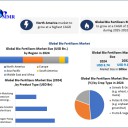
Global Bio Fertilizers Market size was valued at USD 3.74 Bn. in 2024, and the total Bio Fertilizers Market revenue is expected to grow at a CAGR of 11.9% from 2025 to 2032, reaching nearly USD 9.19 Bn.
Global Biofertilizers Market: Trends, Growth Drivers, and Forecast (2025–2032)The Global Biofertilizers Market was valued at USD 3.74 billion in 2024 and is projected to grow at a CAGR of 11.9% from 2025 to 2032, reaching nearly USD 9.19 billion. The market is witnessing significant growth driven by increasing concerns over food safety, the rising adoption of organic farming, and the push for sustainable agriculture practices worldwide.
Market Overview
Biofertilizers are natural formulations containing living microorganisms that enhance soil fertility and promote plant growth by increasing the availability of essential nutrients. When applied to seeds, soil, or plants, biofertilizers improve nutrient uptake, enrich soil health, and reduce reliance on chemical fertilizers. With growing awareness about environmental sustainability and chemical-free food production, biofertilizers are becoming a vital component of modern agriculture.
Nitrogen-fixing biofertilizers, including Rhizobium, Azotobacter, and Azospirillum, are widely used in cereals, legumes, and other high-demand crops. They restore soil nitrogen levels, improve crop yield, and contribute to sustainable farming practices.
To know the most attractive segments, click here for a free sample of the report: https://www.maximizemarketresearch.com/request-sample/44061/" target="_blank"> https://www.maximizemarketresearch.com/request-sample/44061/
COVID-19 Impact
The COVID-19 pandemic had a minimal negative effect on the biofertilizers market. The production of biofertilizers is largely localized and can be managed by domestic manufacturers, ensuring a steady supply even during global disruptions. Furthermore, governments’ emphasis on increasing domestic food production and promoting sustainable agriculture helped maintain consistent demand for biofertilizers, especially in staple crops like rice, wheat, soybeans, fruits, and vegetables.
Key Market Drivers
Growth of the Organic Food Industry
Rising health consciousness among consumers has increased demand for chemical-free, organic produce. Retailers and restaurants are expanding organic product offerings, driving the adoption of biofertilizers and organic manures to meet the growing organic food demand.
Environmental Sustainability
Biofertilizers are eco-friendly alternatives to synthetic fertilizers, reducing soil and water pollution and supporting sustainable farming practices. They play a crucial role in maintaining soil fertility without harming the environment.
Technological Advancements
Innovations in microbial formulations, improved storage techniques, and optimized application methods have enhanced the efficacy and shelf-life of biofertilizers, encouraging wider adoption among farmers.
Market Challenges
Short Shelf Life and Storage Sensitivity
Biofertilizers are sensitive to high temperatures and contamination, requiring careful storage to maintain microbial viability. This presents logistical challenges, particularly in tropical and high-temperature regions.
Limited Awareness and Adoption
Farmers in developing countries often prefer chemical fertilizers due to familiarity and ease of use. Low awareness of biofertilizers’ benefits and limited training programs hinder market penetration.
Fragmented Market Structure
The biofertilizers market is highly fragmented regionally, with multiple brands and varying quality standards, creating challenges in building consumer trust.
Segment Analysis
By Product Type
Nitrogen-Fixing Biofertilizers: Dominated the market in 2024, accounting for 71.2%, due to their effectiveness in replenishing nitrogen-depleted soils.
Phosphate-Solubilizing Biofertilizers and Potash-Mobilizing Biofertilizers support balanced nutrient supply for optimal plant growth.
By Mode of Application
Seed Treatment: Largest share in 2024, around 74%, as it ensures effective nutrient absorption during early crop growth.
Soil Treatment, Foliar Spray, and Root Dipping are increasingly used to enhance nutrient delivery for different crop types.
By Crop Type
Cereals and Grains: Held the highest volume share (76.4%) in 2024. Biofertilizers improve growth and yield in wheat, rice, maize, and other staple crops.
Oilseeds and Pulses: Expected to grow at a CAGR of 12.2%, driven by rising demand for soybean, sunflower, and groundnuts.
Fruits and Vegetables: Adoption is increasing with the rising trend of organic horticulture.
By Form
Liquid Biofertilizers and Carrier-Based (Dry) Biofertilizers are widely available, with liquid formulations offering faster microbial activity.
To know the most attractive segments, click here for a free sample of the report: https://www.maximizemarketresearch.com/request-sample/44061/" target="_blank"> https://www.maximizemarketresearch.com/request-sample/44061/
Regional Insights
North America: Dominated the market with 32.8% revenue share in 2023, supported by organic food demand, government initiatives, and advanced irrigation systems.
Asia Pacific: Expected to grow at 14% CAGR, with countries like India, China, Thailand, and Japan adopting sustainable agriculture practices.
Europe: Increasing adoption of organic farming, along with government incentives and regulatory support, is driving regional growth.
Competitive Landscape
Key players in the global biofertilizers market include:
Lallemand Inc.
Fertilizers USA LLC
AgriLife
Symborg SL
China Biofertilizer (CBF)
Novozymes A/S
Vegalab SA
UPL Limited
Chr. Hansen Holding A/S
Kiwa Bio-Tech
Rizobacter Argentina S.A.
T. Stanes & Company Limited
IPL Biologicals Limited
Nutramax Laboratories Inc.
These companies focus on R&D for advanced microbial formulations, expansion into emerging markets, and partnerships to strengthen global distribution networks.
Conclusion
The Global Biofertilizers Market is poised for strong growth from 2025 to 2032. Rising consumer preference for organic foods, increasing adoption of sustainable agriculture practices, and technological innovations in microbial fertilizers are fueling market expansion. Despite challenges related to awareness and storage, biofertilizers are emerging as a critical component of modern, environmentally friendly agriculture, ensuring improved crop yield, soil health, and long-term sustainability.
Neuste Artikel
- Tax Preparation and Bookkeeping for US Businesses (
 Dannypatil)
 - Tissue Diagnostic Market Size, Share, Growth, Trends, Applications, and Industry Strategies (
 poojammr)
 - Low-Code Development Platform Market Impact of Citizen Developers and No-Code Tools (
 supriyamaximize)
 - Functional Fungi Rising: Global Oyster Mushroom Market Expansion Insights ( solsbarter)
- Bio Fertilizers Market Trends: Seed Treatment and Soil Enrichment Applications 2032 ( supriyamaximize)
- Risk Coverage in a Digital Age: Health Insurance Market Industry Transformation ( solsbarter)
Die neuesten Forenbeiträge
- Salesforce (
 ameliano111)
 - Stay Connected with tigerexch login for Real-Time Scores ( devidjohn)
- Tigerexch Provides Smooth Updates Using tiger exchange id ( devidjohn)
- Was sind typische Extras bei Hochzeitsfotografen? ( Valia96_23)
- Enjoy Every Boundary with tiger exchange id on tigerexch ( devidjohn)
- Warum ist Bildbearbeitung ein so großer Teil des Preises? ( Valia96_23)
Werbung